The Importance of Choosing the Right Wearable Device
In 2026, wearable technology has become an essential tool for individuals seeking to enhance their health, fitness, and daily productivity. With a wide range of devices available, selecting the right wearable requires careful consideration of specific needs, usage scenarios, and technical capabilities. Whether you’re an avid athlete, a busy professional, or someone looking to improve sleep quality, the ideal wearable device should align with your lifestyle and goals. Key factors such as sensor accuracy, battery life, comfort, and compatibility with existing ecosystems play a critical role in determining user satisfaction. For those prioritizing seamless integration with digital services, the Fitbit Charge 6 stands out as a versatile option. This review evaluates its performance across core metrics, helping users assess its suitability for their unique requirements.
Quick Overview
| Feature | Details |
|---|---|
| Device Category | Fitness tracker with integrated Google services |
| Tracking Metrics | Calories, Active Zone Minutes, Daily Readiness, sleep, heart rate |
| Sensors | Photoplethysmography (PPG), accelerometers, GPS |
| Battery Life | Up to 7 days with typical use (1.5 days with GPS) |
| Platform Compatibility | Android Wear 1.0, Google Maps, YouTube Music, Google Wallet |
| Intended Users | Fitness enthusiasts, commuters, health-conscious individuals |
| Durability | Water-resistant (50 meters), dust-resistant |
| Warranty | 1-year limited warranty |
The Fitbit Charge 6 combines essential health and fitness tracking with Google ecosystem integration, making it suitable for users who value convenience and connectivity. Its design and features cater to individuals seeking reliable performance without the complexity of a full smartwatch.

Activity and Health Tracking Capabilities
The Fitbit Charge 6 is designed to provide comprehensive insights into daily activity levels and health metrics. Its advanced sensor suite includes photoplethysmography (PPG) for heart rate monitoring and accelerometers for motion tracking. These components enable accurate measurement of calories burned, Active Zone Minutes, and sleep quality. The device also features a stress management score that analyzes heart rate variability to assess user stress levels. For users prioritizing fitness goals, the 40+ exercise modes and built-in GPS offer detailed tracking of workouts and outdoor activities. The integration of Google Maps allows for turn-by-turn navigation during runs or rides, enhancing usability for active lifestyles. However, the accuracy of GPS data may vary depending on environmental conditions, which could impact the reliability of outdoor tracking.

Real-Time Heart Rate Monitoring
The Charge 6’s PPG sensor provides continuous heart rate tracking, which is particularly useful for users monitoring cardiovascular health. When linked to compatible exercise equipment, the device offers real-time heart rate data, enabling users to adjust their workout intensity accordingly. This feature is especially beneficial for individuals engaging in high-intensity interval training (HIIT) or cardio exercises. The accuracy of heart rate measurements is influenced by factors such as skin contact and ambient light, which may affect data consistency during prolonged use.
Sleep and Stress Analysis
The Charge 6’s sleep tracking functionality includes a personalized Sleep Score that evaluates sleep quality based on movement, heart rate, and breathing patterns. Users receive insights into sleep stages and can identify disruptions that may affect rest. The stress management score, derived from heart rate variability, helps users understand their stress levels throughout the day. While these metrics provide valuable feedback, the interpretation of stress scores may vary based on individual physiological differences, which could influence the perceived effectiveness of the feature.
Fitness Mode and Outdoor Tracking
The 40+ exercise modes cater to a wide range of physical activities, from running and cycling to yoga and swimming. The built-in GPS ensures accurate tracking of outdoor workouts, providing distance, pace, and elevation data. However, GPS performance may be limited in urban environments with tall buildings or dense foliage, which could affect the precision of outdoor activity tracking. The device’s ability to automatically detect exercise sessions reduces manual input, making it ideal for users who prefer a hands-free approach to fitness monitoring.
Sensor Accuracy and Data Reliability
The Fitbit Charge 6 relies on a combination of sensors to deliver accurate health and fitness data. The photoplethysmography (PPG) sensor measures heart rate by detecting changes in blood volume, while accelerometers track movement patterns to estimate calorie expenditure. These sensors work in tandem to provide insights into daily activity levels and sleep quality. However, the accuracy of these metrics can be influenced by factors such as skin contact, movement artifacts, and environmental conditions. For example, heart rate readings may fluctuate during high-intensity workouts due to increased blood flow, which is a common limitation in wearable devices. The device’s ability to maintain consistent data accuracy over time is also a consideration, as sensor drift could affect long-term tracking reliability.

Heart Rate and Stress Metrics
The Charge 6’s heart rate monitoring is particularly useful for users tracking cardiovascular health, but its accuracy may vary under different conditions. For instance, heart rate variability (HRV) measurements used to calculate stress scores can be affected by external factors such as temperature and physical exertion. While the device provides real-time data, users should be aware that these metrics are not a substitute for medical-grade diagnostics. The stress management score is a helpful tool for general wellness, but it should not be used as a sole indicator of health status.
Sleep and Movement Tracking
The sleep tracking functionality relies on accelerometers to detect movement patterns and estimate sleep stages. While this method is effective for identifying wakefulness and deep sleep, it may not capture the full complexity of sleep cycles. The device’s ability to provide detailed insights into sleep quality is a significant advantage for users seeking to improve rest, but the accuracy of these insights depends on consistent wear and minimal movement during sleep. For users with irregular sleep patterns, the Charge 6’s sleep tracking may offer useful trends but may not replace clinical sleep studies.
GPS and Outdoor Accuracy
The built-in GPS ensures accurate tracking of outdoor activities, providing distance, pace, and elevation data. However, GPS performance can be affected by environmental factors such as weather conditions and signal interference. In urban areas with limited satellite visibility, the device may experience delays in location updates, which could impact the accuracy of outdoor workouts. While the Charge 6’s GPS is generally reliable for most use cases, users in challenging environments should be prepared for potential variations in tracking data.
Comfort, Fit, and Wearability
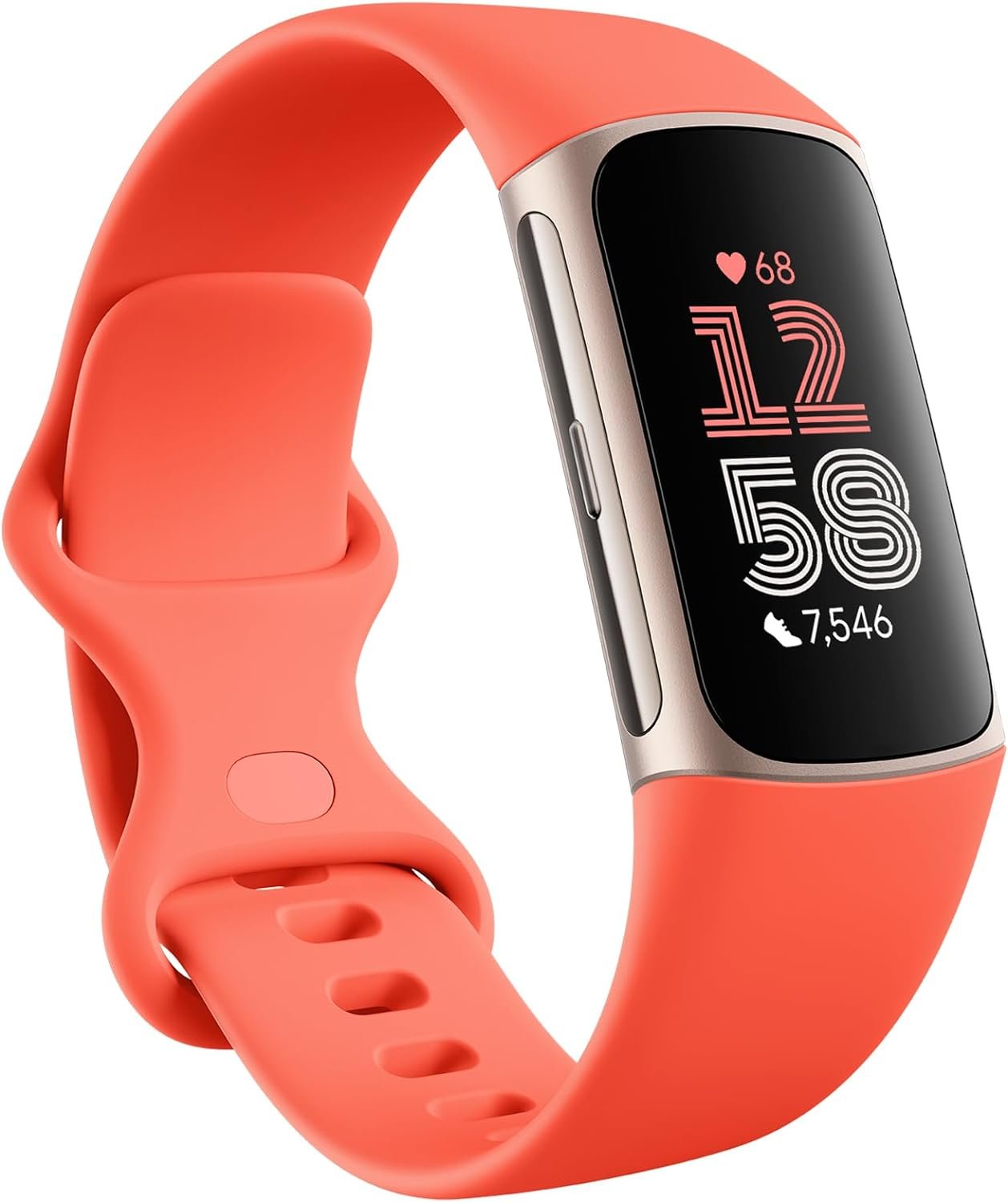
The Fitbit Charge 6 is designed with a focus on comfort and wearability, making it suitable for long-term use. Its rectangular shape and 1.04-inch screen provide a balance between visibility and compactness, while the silicone band offers a flexible fit for different wrist sizes. The device’s lightweight design (4.8 ounces) minimizes discomfort during extended wear, which is particularly beneficial for users who track activity throughout the day. However, the screen size and placement may affect usability for individuals with larger wrists, as the display could be difficult to read in certain orientations. The device’s water resistance (50 meters) ensures durability in various environments, but users should avoid submersion in water beyond the specified limits to prevent damage.

Band Options and Customization
The Charge 6 includes both small and large bands, allowing users to customize the fit according to their preferences. The silicone material provides a snug fit while remaining breathable, which is important for users who wear the device during physical activities. However, the band’s adjustability may be limited for individuals with unique wrist sizes, which could affect comfort during prolonged use. The device’s ability to maintain a secure fit during movement is a key consideration for users who engage in high-impact activities.
Skin Contact and Sensitivity
The Charge 6’s sensors require consistent skin contact to ensure accurate data collection, which may affect wearability for users with sensitive skin. The device’s placement on the wrist can influence the quality of sensor readings, as movement or pressure on the skin may introduce artifacts in the data. For users who prefer minimal skin contact, the Charge 6’s design may not be the most suitable option. However, the device’s ability to maintain stable readings under normal conditions makes it a viable choice for most users.
Durability and Environmental Resistance
The Charge 6’s water resistance (50 meters) and dust resistance make it suitable for use in various environments, including outdoor activities and everyday wear. However, the device’s durability is contingent on proper handling and adherence to usage guidelines. Users should avoid exposing the device to extreme temperatures or prolonged submersion in water to prevent damage. The device’s lithium-ion battery is designed for long-term use, but its performance may degrade over time, which could impact the overall lifespan of the device.
Battery Life and Charging Expectations
Battery life is a critical factor for users who rely on their wearable devices throughout the day. The Fitbit Charge 6 offers up to 7 days of battery life with typical use, which is competitive with other fitness trackers in its category. However, the battery life may be reduced when using GPS-intensive features or when the device is frequently connected to a smartphone. The device’s wireless charging capability provides a convenient way to replenish power, but users should be aware that charging times may vary depending on the charger used. For individuals who need extended battery life, the Charge 6’s power management features are a significant advantage, but frequent recharging may be necessary for heavy usage scenarios.

Power Management and Optimization
The Charge 6’s power management features are designed to extend battery life by optimizing sensor activity and connectivity. Users can adjust settings such as screen brightness and notification frequency to conserve energy. However, the device’s ability to maintain optimal performance while conserving power may vary depending on usage patterns. For users who prioritize long battery life, the Charge 6’s settings provide a degree of customization, but the trade-off between power efficiency and functionality should be considered.
Charging Convenience and Compatibility
The Charge 6 supports wireless charging, which eliminates the need for physical connectors and reduces wear on the charging port. This feature is particularly beneficial for users who prefer a streamlined charging experience. However, the device’s charging speed may be affected by the type of wireless charger used, which could influence the overall convenience of the charging process. For users who rely on daily charging, the Charge 6’s wireless capability is a practical advantage, but the need for frequent charging may still be a consideration for heavy users.
Environmental Impact on Battery Life
The Charge 6’s battery life can be influenced by environmental factors such as temperature and humidity. Extreme temperatures may affect the performance of the lithium-ion battery, which could impact the device’s longevity. Users should avoid exposing the device to extreme conditions to ensure optimal battery life. While the device’s battery is designed for long-term use, the rate of degradation over time may vary depending on usage patterns and environmental exposure.
Device Compatibility and Ecosystem Integration
The Fitbit Charge 6’s integration with the Google ecosystem enhances its usability for users who rely on Google services. The device supports Android Wear 1.0 and offers seamless connectivity with Google Maps, YouTube Music, and Google Wallet. This integration allows users to control music playback, navigate using turn-by-turn directions, and make contactless payments without needing to access their smartphones. However, the availability of these features may vary depending on regional settings and language preferences, which could affect the overall user experience. For users who prioritize ecosystem compatibility, the Charge 6’s integration with Google services is a significant advantage, but it may not be suitable for those who rely on other platforms.

Google Services and Connectivity
The Charge 6’s ability to access Google services such as Maps, YouTube Music, and Wallet enhances its functionality for users who prefer these platforms. The integration with Google Maps provides turn-by-turn navigation during outdoor activities, while YouTube Music controls allow for seamless music playback. However, the availability of these services may be limited in certain regions, which could impact the device’s usability. Users should be aware that the Charge 6’s compatibility with Google services is a key feature but may not be suitable for those who use other digital ecosystems.
Cross-Platform Compatibility
The Charge 6’s compatibility with Android Wear 1.0 ensures seamless integration with Android devices, but its functionality on iOS may be limited. While the device can sync data with iOS devices, certain features such as Google Wallet may not be fully supported. This limitation could affect the overall usability for users who primarily use iOS devices. For users who prioritize cross-platform compatibility, the Charge 6 may not be the most versatile option, but its integration with Android ecosystems is a notable strength.
Software Updates and Support
The Charge 6 receives regular software updates through the Fitbit app, ensuring that users have access to the latest features and security patches. However, the frequency of updates may vary depending on the device’s software version and the availability of new features. The device’s compatibility with future software updates is an important consideration for users who want to ensure long-term usability. While the Charge 6’s software support is generally reliable, users should be prepared for potential limitations in long-term functionality.
Durability and Environmental Resistance
The Fitbit Charge 6 is designed to withstand everyday wear and tear, with a water resistance rating of 50 meters and dust resistance to protect against environmental elements. This makes the device suitable for use in various settings, including outdoor activities and daily routines. However, the device’s durability is contingent on proper handling and adherence to usage guidelines. Users should avoid exposing the device to extreme temperatures or prolonged submersion in water to prevent damage. The device’s lithium-ion battery is designed for long-term use, but its performance may degrade over time, which could impact the overall lifespan of the device.

Water Resistance and Usage Scenarios
The Charge 6’s water resistance (50 meters) allows it to withstand splashes, rain, and brief submersion in water, making it suitable for activities such as swimming and light water sports. However, the device is not designed for prolonged underwater use, and users should avoid submerging it beyond the specified limits to prevent damage. The water resistance rating ensures that the device can handle typical environmental conditions, but users should be cautious when engaging in activities that involve extended water exposure.
Dust Resistance and Environmental Protection
The Charge 6’s dust resistance provides protection against fine particles, making it suitable for use in dusty environments. This feature is particularly beneficial for users who engage in outdoor activities or work in environments with airborne particles. However, the device’s ability to maintain its integrity in extreme conditions may be limited, and users should avoid exposing it to harsh environments to ensure longevity. The dust resistance rating contributes to the device’s overall durability but does not guarantee complete protection against all environmental factors.
Long-Term Durability and Wear
The Charge 6’s durability is influenced by factors such as usage patterns, environmental exposure, and proper maintenance. While the device is designed for long-term use, the lithium-ion battery may degrade over time, affecting the overall performance. Users should be aware that the device’s lifespan may vary depending on how it is used and maintained. For individuals who prioritize long-term reliability, the Charge 6’s durability is a significant advantage, but regular maintenance and proper handling are essential to ensure optimal performance.

Pros & Cons
Pros
- Comprehensive Health and Fitness Tracking: The Charge 6 provides detailed insights into daily activity levels, sleep quality, and heart rate, making it suitable for users who prioritize holistic health monitoring.
- Google Ecosystem Integration: Seamless connectivity with Google Maps, YouTube Music, and Google Wallet enhances usability for users who rely on these services.
- Long Battery Life: Up to 7 days of battery life with typical use ensures minimal disruption to daily routines.
- Water and Dust Resistance: The 50-meter water resistance and dust protection make the device suitable for various environments, including outdoor activities.
- Comfortable Design: The lightweight and flexible band offers a secure fit for extended wear, making it ideal for users who track activity throughout the day.
- 40+ Exercise Modes: The variety of workout options caters to a wide range of physical activities, from running and cycling to yoga and swimming.
- Real-Time Heart Rate Monitoring: Continuous heart rate tracking is beneficial for users monitoring cardiovascular health and adjusting workout intensity.
- Stress Management Score: The heart rate variability analysis provides insights into stress levels, helping users manage their well-being.
Cons
- GPS Accuracy Limitations: GPS performance may be affected by environmental factors such as weather and signal interference, which could impact outdoor tracking accuracy.
- Limited Cross-Platform Compatibility: The Charge 6’s integration with Google services may be less optimal for users who primarily use iOS devices.
- Battery Life Reduction with GPS: Prolonged use of GPS-intensive features may shorten battery life, requiring more frequent charging.
- Skin Contact Sensitivity: The device’s sensors require consistent skin contact for accurate readings, which may affect wearability for users with sensitive skin.
- Potential Sensor Drift Over Time: Long-term use may lead to minor variations in sensor accuracy, which could impact data reliability.
- Limited Customization for Band Fit: The adjustable band options may not accommodate all wrist sizes, potentially affecting comfort during prolonged use.
Final Verdict: Who This Wearable Is Best For (and Who Should Skip It)
The Fitbit Charge 6 is an excellent choice for users who prioritize comprehensive health and fitness tracking with seamless integration into the Google ecosystem. Its 40+ exercise modes, real-time heart rate monitoring, and water resistance make it ideal for individuals who engage in regular physical activity and value convenience. The device’s long battery life and comfortable design are particularly beneficial for users who track activity throughout the day without frequent recharging. However, the Charge 6 may not be the best option for users who rely heavily on iOS devices or require advanced smartwatch features such as third-party app support and extensive customization. Additionally, users who prioritize high-precision GPS tracking in challenging environments may find the Charge 6’s performance limitations to be a drawback. Overall, the Charge 6 is a well-rounded wearable for health-conscious individuals seeking reliable tracking and connectivity without the complexity of a full smartwatch.
Frequently Asked Questions (FAQs)
What are the key health and fitness tracking features of the Fitbit Charge 6?
The Fitbit Charge 6 tracks calories burned, Active Zone Minutes, sleep quality, and heart rate. It includes 40+ exercise modes, built-in GPS for outdoor tracking, and a stress management score based on heart rate variability. The device also supports Google Maps for navigation during workouts and YouTube Music controls for seamless audio access.
How accurate is the heart rate monitoring on the Charge 6?
The Charge 6 uses photoplethysmography (PPG) to measure heart rate, providing continuous tracking during workouts and daily activities. While generally accurate, heart rate readings may vary due to factors like skin contact and ambient light. The device is suitable for general health monitoring but should not replace medical-grade diagnostics.
Can the Charge 6 be used for outdoor activities?
Yes, the Charge 6 includes built-in GPS for accurate tracking of runs, rides, and other outdoor activities. It provides distance, pace, and elevation data. However, GPS performance may be affected by environmental conditions such as weather and signal interference.
How long does the Charge 6’s battery last?
The Charge 6 offers up to 7 days of battery life with typical use. GPS-intensive activities may reduce this to around 1.5 days. The device supports wireless charging, ensuring convenient power replenishment without frequent recharging.
Is the Charge 6 compatible with iOS devices?
The Charge 6 is compatible with iOS devices but offers limited integration with Google services. While it can sync data with iOS, features like Google Wallet and YouTube Music controls are exclusive to Android users. This may affect usability for those primarily using iOS.
What are the durability and water resistance capabilities of the Charge 6?
The Charge 6 is water-resistant up to 50 meters and dust-resistant, making it suitable for use in various environments. It can withstand splashes, rain, and brief submersion in water. However, prolonged underwater use or exposure to extreme temperatures may affect its longevity.
Who would benefit most from using the Charge 6?
The Charge 6 is ideal for fitness enthusiasts, commuters, and health-conscious individuals who prioritize activity tracking, sleep analysis, and Google ecosystem integration. It is particularly beneficial for users who engage in regular physical activity and seek reliable, convenient health insights.
What are the limitations of the Charge 6’s sensor accuracy?
Sensor accuracy on the Charge 6 may be affected by factors such as skin contact, movement artifacts, and environmental conditions. While the device provides reliable data for general use, long-term sensor drift and variations in heart rate variability readings could impact data consistency over time.