The Importance of Choosing the Right Wearable Device
In the fast-evolving landscape of wearable technology, selecting the right device is critical for users seeking to optimize their fitness routines, monitor health metrics, and integrate smart functionality into daily life. For runners and fitness enthusiasts, a wearable that combines accurate GPS tracking, real-time biometrics, and durable design can significantly enhance training outcomes and overall well-being. The Garmin Forerunner 165, a flagship running smartwatch, is engineered to meet these demands by offering advanced sensor technology, a high-resolution AMOLED display, and a suite of training tools tailored for performance optimization. This review evaluates the device’s capabilities across key decision factors, including activity tracking accuracy, comfort for extended wear, battery longevity, and compatibility with existing fitness ecosystems. By analyzing its hardware specifications, software features, and user feedback patterns, this guide provides a data-driven assessment to help potential buyers determine whether the Forerunner 165 aligns with their specific needs and goals.
Quick Overview
| Feature | Details |
|---|---|
| Device Category | Running smartwatch with GPS and fitness tracking capabilities |
| Tracking Metrics | Pace, distance, heart rate, elevation, cadence, and recovery insights |
| Sensors and Hardware | Built-in GPS, wrist-based heart rate monitor, 24/7 activity tracking, and 4 GB memory |
| Battery Life | Up to 11 days in smartwatch mode, 19 hours in GPS mode |
| Platform Compatibility | GarminOS, Bluetooth 5.3, Wi-Fi, and USB connectivity |
| Intended Users | Runners, triathletes, and fitness enthusiasts seeking performance analysis |
| Durability | Water-resistant (50 meters), IP68 rating, and shock-resistant design |
| Warranty and Support | 2-year limited warranty and GarminOS software updates |
The Garmin Forerunner 165’s combination of GPS precision, extended battery life, and comprehensive activity tracking makes it a compelling choice for users prioritizing long-distance running and performance analytics. Its lightweight design and intuitive interface further enhance usability for daily wear and training sessions.

Activity and Health Tracking Suitability
The Garmin Forerunner 165 is specifically designed to meet the demands of runners and fitness enthusiasts who require precise tracking of movement and physiological metrics. Its built-in GPS system provides real-time data on pace, distance, and elevation, enabling users to analyze route performance and adjust training strategies accordingly. The device also includes a wrist-based heart rate monitor that continuously tracks cardiovascular activity, offering insights into workout intensity and recovery needs. Additionally, the 25+ built-in activity profiles allow users to tailor tracking to specific exercises such as cycling, HIIT, and strength training, ensuring that data collection remains relevant to their fitness goals.

GPS Accuracy and Route Analysis
The Forerunner 165’s GPS system is engineered to deliver reliable tracking even in challenging environments. With dual-frequency GPS and GLONASS support, the device minimizes signal loss and maintains accuracy during long runs or outdoor activities. This is particularly beneficial for runners who rely on route data to plan training sessions or monitor progress over time. The device also provides elevation tracking, which is essential for hill training and assessing vertical progress. However, users should note that GPS accuracy may vary in urban areas with limited satellite visibility, which is a common limitation across most wearable devices.
Heart Rate Monitoring and Recovery Insights
The wrist-based heart rate sensor on the Forerunner 165 continuously monitors cardiovascular activity, providing real-time feedback on workout intensity. This data is used to calculate training effect and recovery time, helping users understand how their workouts impact their fitness levels. The device also includes a morning report that summarizes sleep quality, recovery status, and training outlook, offering a holistic view of daily health. While the heart rate sensor is generally accurate, users should be aware that wrist-based monitors may occasionally misinterpret motion artifacts as heart rate variability, which could affect the reliability of certain metrics.
Activity Profiles and Customization
With 25+ built-in activity profiles, the Forerunner 165 caters to a wide range of fitness needs. Users can select from running, cycling, swimming, and HIIT workouts, ensuring that the device adapts to their specific training routines. The inclusion of strength training and yoga profiles further expands its versatility. Customization options allow users to adjust tracking parameters, such as cadence and stride length, to better align with their personal goals. However, the lack of a dedicated swimming mode may be a drawback for users who frequently engage in aquatic activities.
Sensor Accuracy and Data Reliability
The accuracy of a wearable device is paramount for users relying on its data to make informed decisions about their health and fitness. The Garmin Forerunner 165 employs a combination of advanced sensors and algorithms to ensure reliable tracking of movement and biometric data. Its built-in GPS system, paired with GLONASS support, minimizes signal interference and provides consistent location data. The wrist-based heart rate monitor uses photoplethysmography (PPG) to measure blood flow, offering insights into cardiovascular performance. Additionally, the device includes a 3-axis accelerometer and gyroscope to track motion patterns, which is essential for analyzing running form and detecting potential injuries.

GPS Precision and Environmental Factors
The Forerunner 165’s GPS system is designed to maintain accuracy in a variety of environments, including urban areas and open fields. Dual-frequency GPS and GLONASS support reduce the likelihood of signal loss, which is crucial for runners who train in areas with limited satellite visibility. However, the device’s performance may be affected by factors such as tall buildings, dense foliage, or adverse weather conditions. Users should be aware that GPS accuracy can vary depending on the number of satellites in view and the quality of the device’s antenna.
Heart Rate and Biometric Consistency
The wrist-based heart rate sensor on the Forerunner 165 is generally accurate for most users, though it may occasionally misinterpret motion artifacts as heart rate variability. This is a common limitation of wrist-based monitors, which can lead to slight discrepancies in readings. The device also tracks other biometrics, such as step count and distance, which are calibrated to ensure consistency across different activities. However, users should note that the accuracy of these metrics may be affected by the device’s placement on the wrist and the user’s movement patterns.
Data Synchronization and Software Reliability
The Forerunner 165’s data synchronization with the Garmin Connect app ensures that users can access their training history, performance metrics, and health insights in real time. The software is regularly updated to improve accuracy and add new features, which enhances the device’s long-term value. However, some users have reported occasional delays in data syncing, particularly when using multiple devices simultaneously. The reliability of the software is generally strong, though minor bugs or compatibility issues may arise with third-party apps or operating system updates.
Comfort, Fit, and Wearability
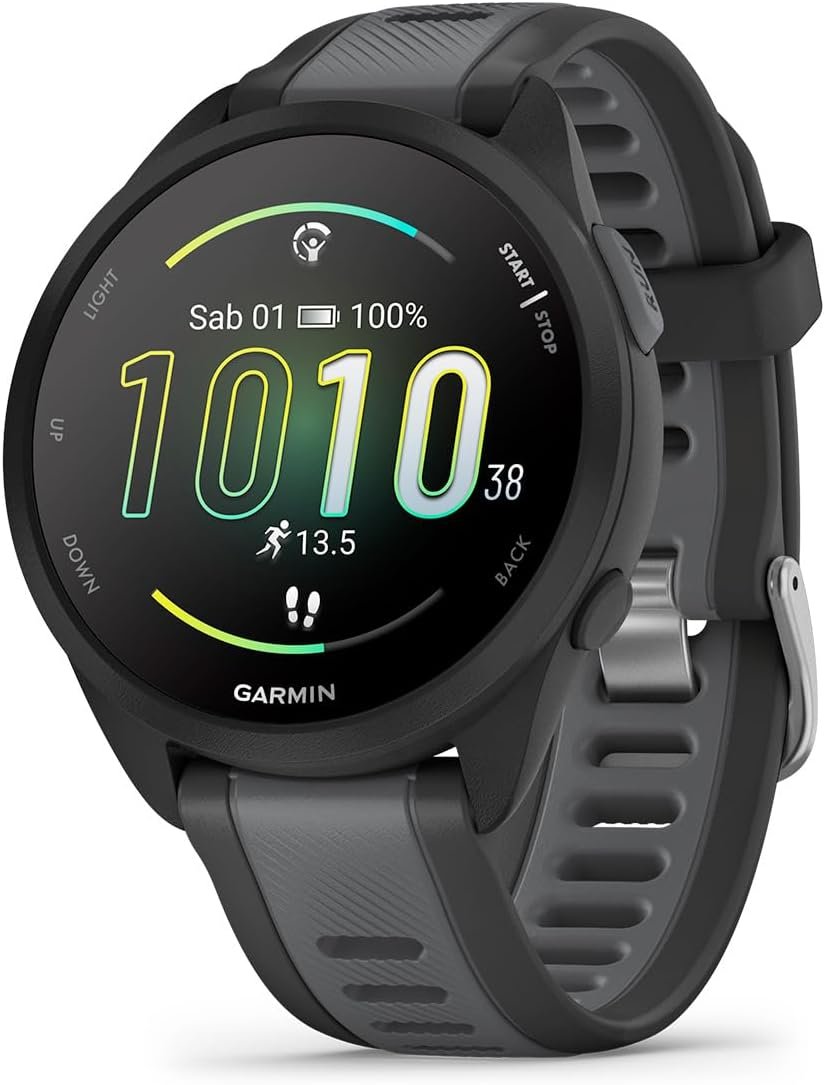
A wearable device’s comfort and fit are critical for long-term use, especially for users who wear it during extended training sessions or daily activities. The Garmin Forerunner 165 features a lightweight design with a 43 mm round shape, making it easy to wear without causing discomfort. The AMOLED touchscreen display is both bright and responsive, allowing users to navigate menus and view data without adjusting the device’s position. The device’s band is designed to be flexible and secure, accommodating different wrist sizes while maintaining a snug fit during physical activity. However, the lack of a customizable band option may limit its appeal to users who prefer interchangeable accessories.

Lightweight Design and Ergonomic Considerations
The Forerunner 165’s lightweight construction is one of its standout features, as it reduces the burden on the wrist during prolonged use. The 43 mm size is considered standard for running watches, providing a balance between visibility and comfort. The device’s rounded edges and smooth finish contribute to its ergonomic design, making it less likely to cause irritation during wear. However, users with smaller wrists may find the size slightly cumbersome, though the adjustable band helps accommodate different wrist measurements.
AMOLED Display and User Interface
The AMOLED touchscreen display on the Forerunner 165 offers vibrant colors and high contrast, making it easy to read in various lighting conditions. The traditional button controls provide a tactile option for navigation, which is beneficial for users who prefer physical interactions over touchscreen gestures. The interface is intuitive, with clear icons and menus that allow users to access key functions quickly. However, the lack of a touchscreen in some modes, such as GPS-only tracking, may require users to rely on the physical buttons for navigation.
All-Day Wearability and Durability
The Forerunner 165 is designed for all-day wear, with a focus on durability and resistance to environmental factors. Its IP68 rating ensures that it can withstand water exposure up to 50 meters, making it suitable for swimming and light rain. The device’s shock-resistant design also helps protect it from impacts during physical activity. However, users should be cautious with extreme temperatures, as the lithium polymer battery may perform differently in very cold or hot environments. The overall build quality is robust, though the plastic casing may not provide the same level of premium feel as metal or ceramic alternatives.
Battery Life and Charging Expectations
Battery life is a crucial factor for users who rely on their wearable devices for extended periods without access to charging. The Garmin Forerunner 165 offers up to 11 days of battery life in smartwatch mode, which is ideal for users who need to track daily activity without frequent recharging. In GPS mode, the battery life is reduced to 19 hours, which is sufficient for long-distance runs or outdoor training sessions. The device’s power efficiency is enhanced by its ability to switch between modes based on user activity, conserving energy for critical functions such as heart rate monitoring and GPS tracking.

Smartwatch Mode vs. GPS Mode
The Forerunner 165’s battery life varies significantly depending on the mode of operation. In smartwatch mode, the device uses minimal power to track basic activity metrics, allowing for extended use without charging. This mode is ideal for users who need to monitor daily steps, heart rate, and notifications throughout the day. In contrast, GPS mode consumes more power to provide real-time location data, which is essential for runners who require accurate route tracking. Users should be aware that switching between modes may affect the overall battery longevity, especially during prolonged outdoor activities.
Charging Time and Power Efficiency
The Forerunner 165 charges via USB, with a full charge taking approximately 1.5 to 2 hours. The device’s power efficiency is optimized to extend battery life, though users may need to recharge it more frequently when using GPS-intensive features. The lithium polymer battery is designed to maintain its capacity over time, though performance may degrade with extended use. For users who frequently engage in long runs or outdoor activities, the 19-hour GPS battery life is a significant advantage, though it may require planning for regular charging sessions.
Power Management and User Experience
The Forerunner 165 includes power management features that help extend battery life without compromising functionality. The device automatically adjusts its power consumption based on user activity, such as turning off non-essential sensors when not in use. This intelligent power management ensures that the device remains operational for extended periods while maintaining data accuracy. However, users should be mindful of the device’s power settings, as aggressive use of GPS or continuous heart rate monitoring can drain the battery more quickly.
Pros & Cons
Pros
- Accurate GPS Tracking: The dual-frequency GPS and GLONASS support ensure reliable location data for runners and outdoor enthusiasts.
- Extended Battery Life: Up to 11 days of smartwatch mode operation makes it ideal for daily use without frequent charging.
- Comprehensive Activity Profiles: 25+ built-in activity profiles cater to a wide range of fitness needs, from running to strength training.
- Real-Time Recovery Insights: Training effect labels and recovery time estimates help users optimize their workout schedules.
- Safety Features: Incident detection and emergency assistance provide an added layer of security during outdoor activities.
- Water-Resistant Design: The IP68 rating ensures durability in wet conditions, making it suitable for swimming and light rain.
- Intuitive Interface: The combination of AMOLED touchscreen and physical buttons offers a user-friendly experience for navigation.
- Regular Software Updates: GarminOS receives regular updates to enhance functionality and improve data accuracy.
Cons
- Limited Smartwatch Features: The device lacks cellular connectivity and some advanced smartwatch features found in competitors.
- No Dedicated Swimming Mode: While water-resistant, the lack of a specialized swimming profile may affect accuracy during aquatic activities.
- Occasional GPS Delays: Users may experience minor delays in GPS signal acquisition in areas with limited satellite visibility.
- Wrist-Based Heart Rate Limitations: The PPG sensor may occasionally misinterpret motion artifacts as heart rate variability.
- Battery Life in GPS Mode: While 19 hours is sufficient for long runs, it may require planning for regular charging sessions.
- No Customizable Bands: The lack of interchangeable band options may limit personalization for some users.
Final Verdict: Who This Wearable Is Best For (and Who Should Skip It)
The Garmin Forerunner 165 is an excellent choice for runners and fitness enthusiasts who prioritize GPS accuracy, long battery life, and comprehensive training insights. Its ability to track detailed metrics such as elevation, cadence, and recovery time makes it ideal for users aiming to refine their performance and optimize training regimens. The device’s water-resistant design and durable build also make it suitable for a variety of environments, from trail running to light aquatic activities. However, users who require advanced smartwatch features, such as cellular connectivity or a dedicated swimming mode, may find the Forerunner 165 less suitable. Additionally, those who prefer customizable band options or a more premium feel may want to consider alternatives with greater customization flexibility. Overall, the Forerunner 165 remains a strong contender in the running smartwatch category for users who value precision, longevity, and performance-focused tracking.
Frequently Asked Questions (FAQs)
Does the Garmin Forerunner 165 track heart rate accurately?
The Forerunner 165 uses a wrist-based heart rate monitor that provides continuous cardiovascular data. While generally accurate, it may occasionally misinterpret motion artifacts as heart rate variability, which is a common limitation of wrist-based sensors.
How long does the battery last in GPS mode?
In GPS mode, the Forerunner 165 offers up to 19 hours of battery life, which is sufficient for long-distance runs or extended outdoor activities. Users should plan for regular charging sessions if using this mode frequently.
Can the Forerunner 165 sync with third-party apps?
The device primarily syncs with the Garmin Connect app for data analysis and training insights. While it supports Bluetooth connectivity, compatibility with third-party apps may be limited, and users should verify app-specific requirements.
Is the Forerunner 165 water-resistant?
The Forerunner 165 is rated IP68, making it water-resistant up to 50 meters. This allows it to withstand light rain and swimming, though it is not designed for deep-sea diving or extreme water conditions.
Does the Forerunner 165 have a touchscreen?
The Forerunner 165 features an AMOLED touchscreen display, which is responsive and easy to navigate. However, some modes, such as GPS-only tracking, rely on traditional button controls for operation.
Can the Forerunner 165 track swimming?
While the Forerunner 165 is water-resistant, it lacks a dedicated swimming mode. Users who frequently swim may find the device less accurate for aquatic activities compared to specialized swim watches.
What is the screen size of the Forerunner 165?
The Forerunner 165 has a 1.2-inch AMOLED touchscreen, providing clear visibility of data and metrics in various lighting conditions. The screen size is optimized for running and outdoor use.
How does the Forerunner 165 handle GPS accuracy in urban areas?
The Forerunner 165 uses dual-frequency GPS and GLONASS support to improve signal reception in urban environments. However, GPS accuracy may still be affected by tall buildings or limited satellite visibility, which is a common challenge for wearable devices.