Why wearable selection matters
Selecting a wearable device is a decision that balances tracking needs, sensor fidelity, comfort, battery endurance, and platform fit. For people prioritizing daily activity monitoring, reliable heart rate and blood oxygen trends, and long battery intervals, the choice of a smartwatch affects both the quality of insights and the convenience of continuous wear. This review addresses those decision points for the Amazfit Bip 5 Core by focusing on specifications and commonly reported user outcomes. Intended users include fitness-minded consumers, casual exercisers tracking steps and workouts, and smartphone users who require seamless data sync across apps. The device characteristics discussed here emphasize sensor types, power management, software connectivity, and form factor to help determine whether the device aligns with specific tracking goals and long-term wear expectations.
Quick Overview
| Feature | Details |
|---|---|
| Device category | Smartwatch (square 46mm-style case) |
| Supported tracking metrics | Heart rate, blood oxygen (SpO2), sleep, stress, steps, calories, menstrual cycle tracking |
| Sensors & hardware | Optical heart-rate sensor, SpO2 monitoring, accelerometer, touchscreen; stainless steel frame and anti-fingerprint display |
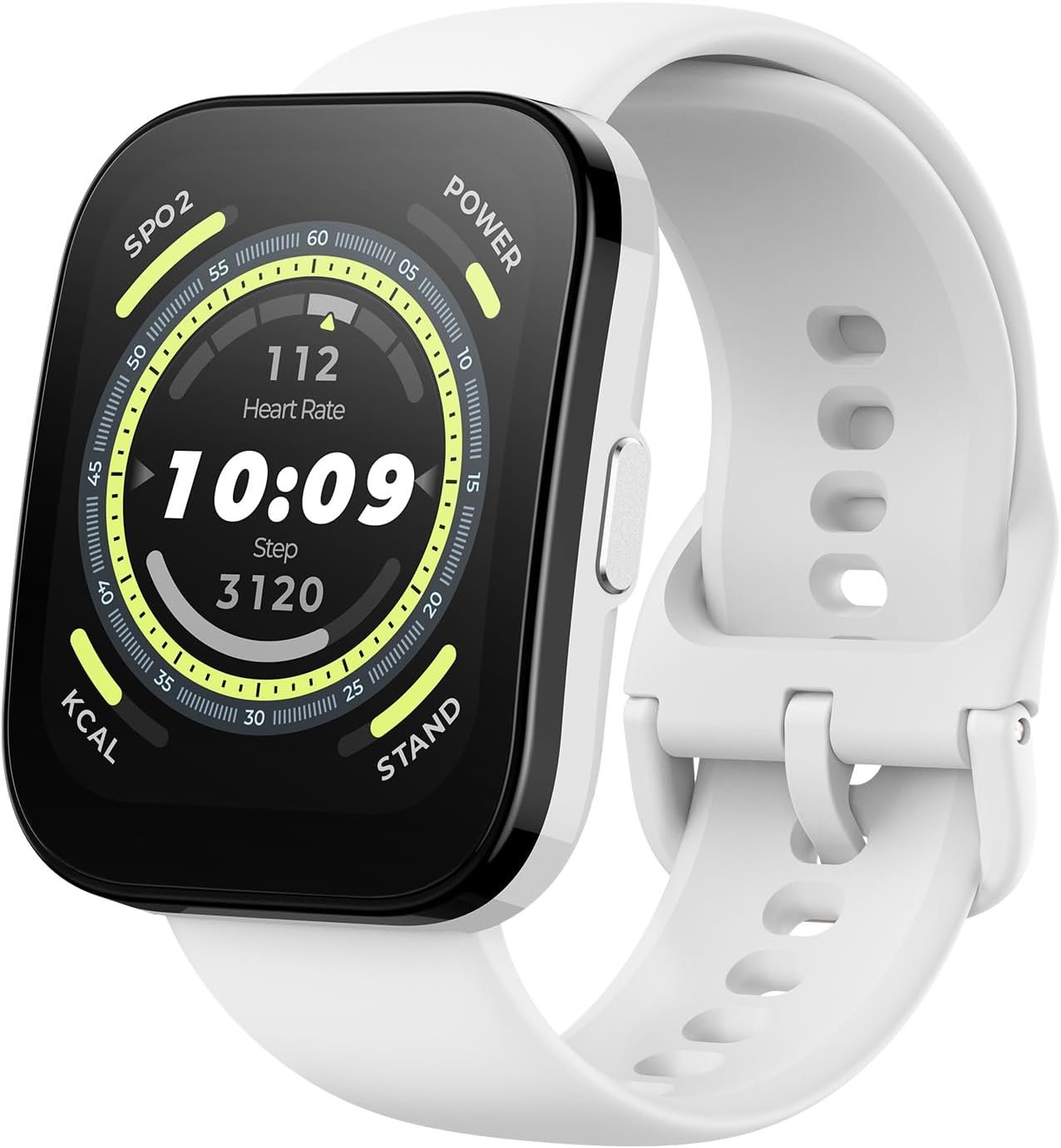
| Display | 1.91-inch high-resolution, vibrant anti-fingerprint screen with 70+ watch faces |
| Battery | 280 mAh lithium polymer cell; up to 11 days typical use, up to 26 days in battery-saver mode |
| Memory & apps | 60 MB onboard storage; Zepp OS with 70+ downloadable mini apps and widgets |
| Sports & GPS | 120+ sports modes; GPS via smartphone tethering (no native GNSS onboard) |
| Connectivity & compatibility | Bluetooth connection to Android and iPhone via Zepp app; data sync to Strava, Apple Health, Google Fit, Adidas Running |
| Durability & resistance | Water resistant (manufacturer-stated); stainless steel frame; touchscreen input |
| Manufacturer & model | Amazfit Bip 5 Core; item model Bip 5 Core |
This concise feature matrix translates to user suitability by showing strengths and constraints: strong on battery, display, and software flexibility through Zepp OS, but relying on smartphone GPS and Bluetooth tethering for precise route tracking. The sensor suite supports common wellness metrics, while the stainless steel frame and water resistance enable everyday wear and exercise use.

Sensor performance and health monitoring
The Amazfit Bip 5 Core’s health monitoring relies on an optical heart-rate sensor and SpO2 monitoring paired with algorithmic analysis within Zepp OS and companion app processing. Optical sensors produce continuous heart-rate trends and spot SpO2 readings, but accuracy depends on sensor placement, skin contact, motion, and firmware algorithms. Sleep and stress metrics derive from heart-rate variability and accelerometer patterns, which provide useful trend data for day-to-day comparisons; however, these are not clinical measurements. Reported evaluation practices recommend interpreting values as lifestyle indicators rather than diagnostic readings, and reviewing raw trends in the companion app enables assessment of signal consistency and artifact events.

Heart-rate and SpO2 monitoring: hardware and expected performance
Optical photoplethysmography (PPG) sensors used in this device measure volumetric changes in blood flow beneath the skin to estimate heart rate and SpO2. When fitted correctly on the wrist and during low-motion periods, PPG can deliver consistent trends for resting and workout heart rates. Rapid changes in motion or loose straps increase artifact risk and can yield transient inaccuracies. Spot SpO2 measurements are suitable for assessing general blood oxygen trends but are sensitive to motion, ambient light, and wrist perfusion. Industry-standard practice recommends repeat readings and avoiding motion during SpO2 checks for more stable values.
Sleep and stress tracking: algorithmic limitations and value
Sleep staging and stress estimation combine accelerometer activity and heart-rate variability data processed through proprietary algorithms. These outputs offer comparative insights—such as sleep duration, light versus deep sleep trends, and sleep consistency—rather than clinical-grade sleep lab results. Stress scores derived from short-term heart-rate variability provide an indication of autonomic variance influenced by activity, hydration, and caffeine; interpretation should emphasize trends over absolute values. Regular nightly wear and synchronization with the Zepp app improve trend resolution and allow users to identify consistent patterns across days.
Data reliability, privacy, and reporting caveats
Sensor output and derived metrics depend on both hardware fidelity and firmware/modeling in the companion app. Periodic firmware updates can alter how metrics are calculated, so ongoing consistency requires monitoring release notes and understanding algorithmic updates. Data sharing with third-party platforms follows the app’s integration settings and privacy policies; users concerned about raw data access or data retention should review Zepp app permissions and export options. These factors influence the long-term usefulness of health monitoring for lifestyle decisions rather than clinical diagnosis.
Activity tracking and sports mode coverage
Activity tracking centers on step counting, calories, and 120-plus sports modes that encompass walking, running, cycling, gym workouts, and niche activities. Because the Bip 5 Core uses smartphone GPS for route and pace data, real-time mapping and distance accuracy depend on the paired phone’s satellite reception and Bluetooth connectivity. The extensive sports mode library supports structured workouts and multi-mode sessions, but the absence of native GNSS means outdoor run metrics rely on a stable phone link. For gym-based metrics and indoor workouts, the wrist sensors and accelerometer provide cadence and motion-derived metrics that are appropriate for most recreational athletes and exercisers seeking progress tracking rather than elite-level metrics.

Sports modes, workout types, and recording considerations
The watch offers a broad set of activity profiles that can be selected before exercise to capture mode-specific metrics. Each mode uses a mix of heart-rate, accelerometer, and time-based calculations; selection improves metric relevance (for example, swim counters versus treadmill mode). Workout recording duration and data fidelity depend on continuous Bluetooth connectivity for GPS-dependent sessions. For interval training or multi-sport routines, mode switching and clear labeling in the app help preserve structured session data and export to platforms like Strava for post-workout analysis.
GPS via smartphone: implications for outdoor tracking
Relying on smartphone GPS means outdoor distance, route, and speed accuracy depend on the phone’s GNSS hardware and signal quality rather than an integrated receiver in the watch. This approach conserves watch battery and reduces device complexity, but requires the phone to be carried for reliable geo-tracking. Intermittent connection dropouts can cause gaps or smoothing in route files; therefore, users expecting continuous, high-precision GPS logs should consider devices with onboard GNSS. For many users focused on cadence, heart-rate zones, and general pacing, smartphone-assisted GPS provides an acceptable compromise.
Comfort, fit, and durability for exercise and long sessions
Comfort during workouts is influenced by case size, strap material, and weight—factors that affect sensor contact with the skin and data consistency. The stainless steel framed case and the supplied strap balance robustness with everyday comfort, but the 46mm-style size may feel larger on smaller wrists. Proper strap tension helps secure optical sensors for more reliable readings during high-motion activities. The manufacturer’s water resistance rating and stainless steel construction support pool and sweat exposure, but prolonged immersion or repeated exposure to harsh chemicals should be managed according to care instructions to maintain seals and finish.
Battery life, charging, and power management
The listed battery capacity is 280 mAh lithium polymer with manufacturer guidance of up to 11 days typical use and up to 26 days in battery-saver mode. These estimates reflect mixed usage patterns and assume Bluetooth tethering, periodic heart-rate sampling, and notification use. Battery endurance will vary with screen brightness, frequency of heart-rate and SpO2 sampling, use of continuous notifications, mini apps, and the reliance on smartphone GPS. Power-saving modes reduce sensor polling, disable some connectivity, and restrict background tasks to extend runtime. Understanding the trade-offs between feature availability and battery consumption helps set realistic charging intervals for daily users.

Typical and power-saver scenarios: realistic expectations
Typical use expectations incorporate daily activity tracking, periodic heart-rate monitoring, notification handling, and several workout sessions per week. Under these conditions, the stated 11-day runtime represents a balanced scenario; higher-intensity use with frequent SpO2 checks, always-on display settings, or extended app interactions will lower runtime. Battery-saver modes extend life by restricting sensor frequency and background sync; the 26-day figure applies under heavy restrictions that limit functionality. Planning charging cadence around sleep cycles or less active days helps maintain continuous monitoring.
Charging method, times, and efficiency considerations
Charging is via the proprietary magnetic charging dock or cradle supplied by the manufacturer, designed for the device’s contact points. Lithium polymer chemistry allows compact packaging but benefits from avoiding extreme state-of-charge cycles; keeping the watch between moderate charge levels supports long-term battery health. Charge times depend on the supplied charger’s current rating—using the issued cable and charger is recommended. Avoiding repeated deep discharges and high-temperature charging environments contributes to consistent battery performance over time.
Power-saving strategies and app settings that extend runtime
Reducing screen brightness, shortening screen timeout, limiting continuous SpO2 checks, and disabling always-on features directly decrease power draw. Selective use of mini apps and limiting third-party background sync reduce processor activity and Bluetooth transmission frequency. Scheduling workout synchronization to Wi‑Fi or while charging can defer heavy data transfers and conserve daily battery. The Zepp app’s notification filters and activity detection toggles also influence how aggressively the device samples sensors and performs background tasks.
Connectivity, platform compatibility, and ecosystem integration
The Amazfit Bip 5 Core connects to phones via Bluetooth and runs Zepp OS with a companion Zepp mobile app that manages settings, firmware updates, and data synchronization. Native integrations permit exporting activity and health data to third-party platforms such as Strava, Apple Health, Google Fit, and Adidas Running, enabling cross-platform continuity for many users. Onboard memory is limited to 60 MB, which supports mini apps and local watch faces but constrains large offline media or music storage. Bluetooth versions and phone Bluetooth performance influence connection stability, and the companion app’s behavior and account permissions determine the smoothness of data transfers and export routines.

Bluetooth stability and pairing with Android and iPhone
Bluetooth pairing procedures follow standard device discovery and permission steps in the Zepp app on both Android and iOS. Connection stability is influenced by phone model, Bluetooth stack implementation, and background app management—especially on some Android devices where aggressive power-saving can suspend the companion app and disrupt sync. In practice, maintaining the Zepp app in background-exempt lists and ensuring the phone’s Bluetooth stack is up to date reduces dropped connections and missed notifications. Firmware updates to both watch and app can improve interoperability over time.
Third-party data sync: Strava, Apple Health, Google Fit and limitations
The watch supports exporting activity summaries and health metrics to popular fitness ecosystems through the Zepp app. Integrations allow workouts and basic health metrics to appear in third-party services for broader training analysis. Exported data fidelity depends on the data fields mapped and whether GPS data originates from the phone. Some advanced metrics or proprietary algorithm outputs may not transfer verbatim, and users relying on a particular platform should verify which metrics are included in the export and how intervals and labeled workouts appear.
Zepp OS mini apps, storage limits, and software support expectations
Zepp OS enables 70-plus downloadable mini apps and watch faces, offering customization and lightweight functionality. The 60 MB onboard storage constrains the number and size of installed mini apps and media, so prioritizing essential tools is necessary. Software support and periodic firmware updates are managed by the manufacturer; app store reviews and aggregated user feedback indicate that timely updates improve feature stability and extend compatibility, but update cadence and regional rollout could vary. Users should plan for occasional maintenance windows and review release notes for impactful changes.

Pros & Cons
Pros
- Long battery endurance for daily monitoring: The 280 mAh battery and power-saving modes produce extended runtime, reducing charging frequency for users who value multi-day wear and overnight sleep tracking. Conserving power through software settings extends practical usage between charges.
- Broad activity coverage with many sports modes: Over 120 sports modes provide tailored tracking templates for diverse activities, supporting recreational athletes and fitness enthusiasts who engage in multiple workout types. Mode-specific metrics improve session relevance compared with generic tracking.
- Comprehensive health sensors for lifestyle insights: Optical heart-rate monitoring, SpO2 checks, sleep staging, and stress estimation furnish a broad set of wellness indicators useful for trend analysis and daily habit adjustments. The combination supports ongoing lifestyle monitoring rather than clinical measurement.
- Lightweight software ecosystem and mini apps: Zepp OS and 70+ mini apps offer customization and lightweight functionality, allowing users to add utilities without heavy resource demands. Integration with popular platforms enables cross-platform data aggregation.
- High-visibility display and durable case materials: The 1.91-inch anti-fingerprint screen improves readability for notifications and metrics, while a stainless steel frame increases durability relative to plastic-only designs. A variety of watch faces enhances personalization.
- Data export and platform integrations: Syncing with Strava, Apple Health, Google Fit, and other services facilitates continuity for users who already rely on these ecosystems for training analysis or long-term health records.
Cons
- No onboard GPS receiver: Reliance on smartphone GPS limits standalone outdoor tracking and requires carrying a phone for accurate route mapping and pace data. This is a constraint for users seeking fully independent runs or rides without a phone.
- Sensor accuracy influenced by fit and motion: Optical sensor outputs (heart rate, SpO2) are susceptible to motion artifact and strap fit; vigorous activities and loose wear can produce noisy readings. Results are suitable for trend monitoring rather than clinical use.
- Limited onboard storage and media capability: With 60 MB of onboard storage, the device cannot host large media libraries or many large mini apps simultaneously, requiring careful selection of installed items and reliance on the companion app for larger data needs.
- Third-party sync and app behavior dependent on companion app: Data export fidelity and sync reliability are tied to the Zepp app and phone Bluetooth stack, and some users report intermittent notification or sync issues depending on phone make and background app management.
Final Verdict: Who This Wearable Is Best For (and Who Should Skip It)
The Amazfit Bip 5 Core suits users who prioritize long battery life, a clear, large display, and a broad set of activity modes while relying on their smartphone for precise GPS tracking. It is a practical choice for recreational runners and cyclists who typically carry a phone, gym-goers tracking indoor workouts, and users who value daily sleep, heart-rate, and SpO2 trend monitoring without expecting clinical-grade measurements. The Zepp OS mini app ecosystem and third-party integrations provide flexibility for users who want cross-platform data sharing.
This wearable is less appropriate for athletes or outdoor users needing onboard GNSS for phone-free route capture, and for those requiring medical-grade sensor accuracy. Users needing extensive offline storage or advanced multi-sport triathlon features should consider models with native GNSS and larger onboard memory. Overall, the Bip 5 Core offers a balanced feature set for everyday fitness and wellness tracking when used within its design constraints and smartphone-assisted GPS workflow.
Frequently Asked Questions (FAQs)
How accurate is the Amazfit Bip 5 Core for heart rate and SpO2 readings?
Optical heart-rate and SpO2 readings provide trend-level information that is useful for lifestyle monitoring. Accuracy depends on sensor contact, strap tightness, motion, and firmware algorithms. For resting heart rate and short, motion-free SpO2 checks the readings are generally consistent, but rapid motion or loose wear increases artifact risk. These measures are not clinical diagnostics and should be interpreted as comparative indicators.
Does the Amazfit Bip 5 Core have built-in GPS for outdoor runs?
The Bip 5 Core relies on smartphone GPS tethering rather than an integrated GNSS receiver. Outdoor route, pace, and distance accuracy depend on the paired phone’s satellite reception and Bluetooth stability. Users who require phone-free route recording or the highest standalone GPS precision should select a model with onboard GNSS hardware.
What battery life can be expected in everyday use?
Manufacturer guidance lists up to 11 days for typical mixed use and up to 26 days in battery-saver mode. Real-world runtime varies based on display brightness, frequency of heart-rate and SpO2 measurements, notification load, mini app usage, and reliance on smartphone GPS. Power-saving settings that reduce sensor polling and background sync extend practical battery life.
Which fitness platforms does the watch sync with?
The Amazfit Bip 5 Core synchronizes activity and health data through the Zepp app and supports export to third-party platforms such as Strava, Apple Health, Google Fit, and Adidas Running. The extent of exported metrics depends on mapping and whether GPS data originates from the phone. Users should verify which data fields transfer to their preferred platform.
How comfortable and durable is the Bip 5 Core for all-day wear?
The watch combines a stainless steel frame with a lightweight strap and a 1.91-inch display, which supports extended wear and nighttime monitoring. Comfort depends on wrist size and strap adjustment; proper fit improves sensor contact. The manufacturer states water resistance and the stainless steel case increases durability for routine activity and sweat exposure, but prolonged chemical exposure or deep-water use should follow care guidance.
Can mini apps be installed and how much storage is available?
Zepp OS supports over 70 mini apps and many watch faces, but onboard storage is limited to 60 MB. This constrains the number and size of installable mini apps and media files; prioritizing essential apps preserves capacity. Larger data sets and backups should be managed via the companion Zepp app on the connected smartphone.
Is the Amazfit Bip 5 Core suitable for serious athletes?
For recreational athletes and regular fitness enthusiasts, the device offers broad sports mode coverage and useful heart-rate trends. However, serious athletes seeking advanced performance metrics, phone-free GNSS tracking, or clinical-grade sensor accuracy may prefer models with built-in GNSS, higher sampling rates, and more specialized training analytics.