AMOLED Rugged Smartwatch for Calls and Fitness Tracking Plus
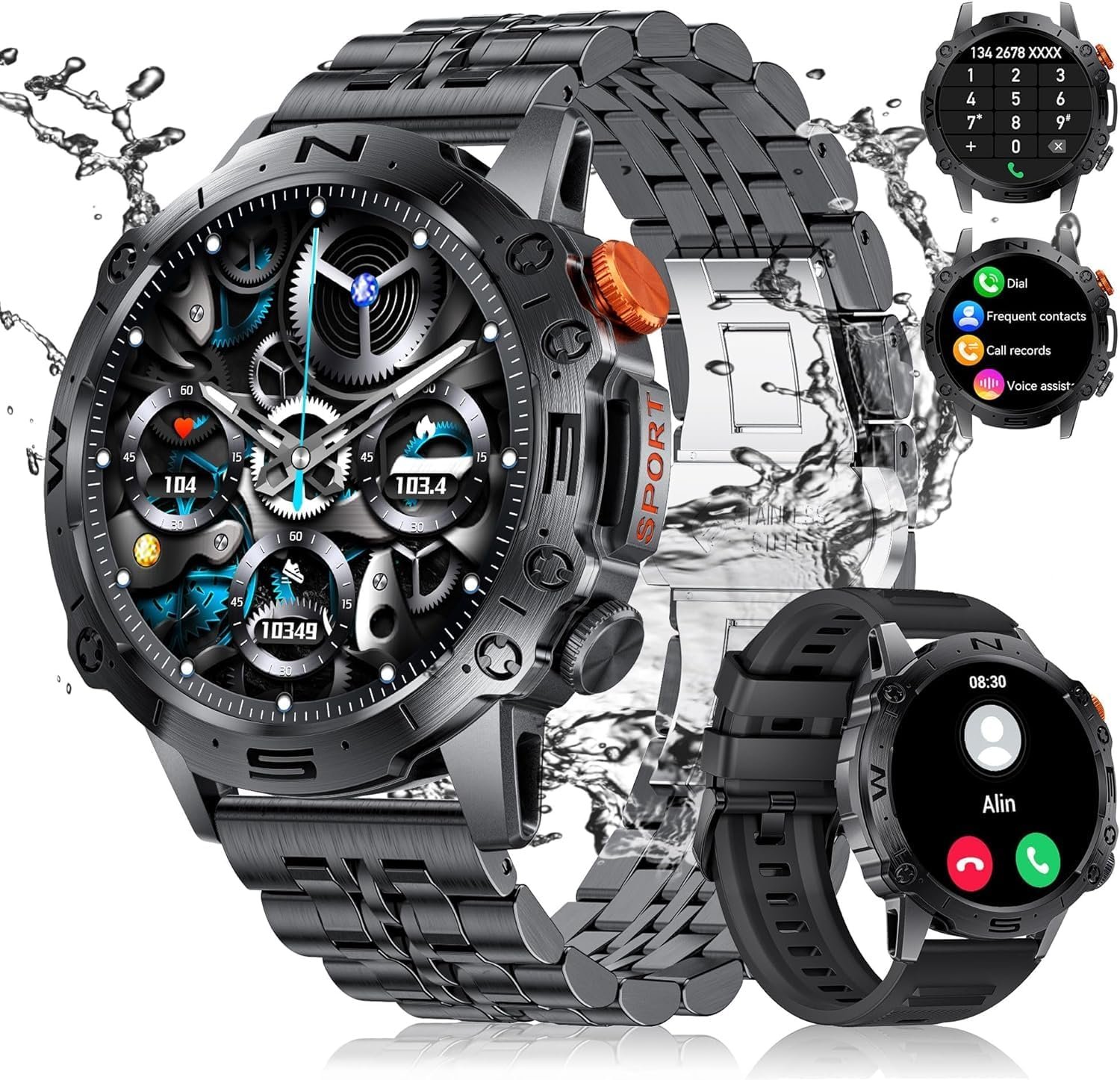
Selecting a wearable that balances durability, accurate tracking, and everyday usability matters for outdoor enthusiasts, tactical users, and people prioritizing reliable health data. The right choice depends on intended usage: daily activity logging, structured workouts, sleep and heart metrics, or on-device communication via Bluetooth calls. This smartwatch positions itself as a military-style, all-day tracker with a 1.43-inch AMOLED always-on display, microphone and speaker for call handling, and a suite of optical sensors for heart rate, SpO2 and blood pressure estimates. Considerations include lack of integrated GPS, Wear OS listing alongside a third-party app for phone syncing, and a 360mAh battery cited for multi-day runtime. Sensor type, sampling frequency, algorithm design, and placement all affect metric reliability; similarly, display brightness, strap materials, and weight influence comfort during long wear. This review frames those characteristics against typical buyer needs—fitness tracking, basic health monitoring, rugged use, and hands-free calling—so users can evaluate suitability without implying hands-on validation.
Quick Overview
| Feature | Details |
|---|---|
| Device category | Smartwatch (round, tactical/rugged) |
| Display | 1.43″ circular AMOLED; resolution 396 x 484; Always-On Display (AOD) |
| Tracking metrics | Heart rate (24/7), SpO2, blood pressure estimates, sleep stages, steps, distance, calories |
| Sensors & hardware | Optical heart rate/SpO2 sensors, microphone and speaker, touchscreen, 128 MB memory |
| Sports & activity modes | 126+ exercise modes including running, cycling, rowing, golf, elliptical |
| Battery | 360 mAh LiPo; manufacturer-stated 7–10 days typical use, 30 days standby; ~2-hour charge time |
| Connectivity | Bluetooth; sync via FitCloudPro app; call handling and notifications |
| GPS | No onboard GPS |
| Durability | IP68 water/dust rating; manufacturer cites multiple military-style certifications (shock, temperature) |
| Materials & straps | Metal composite case; 304 stainless steel bracelet included plus silicone strap |
| Compatibility | Described as Wear OS and compatible with iOS and Android via app |
These specifications indicate a device aimed at buyers who want a visually bright AMOLED screen, a broad set of activity modes, continuous optical health monitoring, and basic on-watch call handling via Bluetooth. The lack of onboard GPS and reliance on phone connectivity are important trade-offs for buyers prioritizing independent outdoor tracking.

Activity tracking and sports suitability
The device targets multi-sport users with 126+ modes, offering tailored metrics for varied exercise forms from indoor rowing to golf. Activity detection will depend on onboard accelerometer and motion algorithms to classify patterns and calculate steps, distance and calories; without integrated GPS, outdoor pace and route mapping must rely on a paired smartphone’s location if the app supports it. Sports modes that depend primarily on cadence, cadence sensors, or stroke detection (for rowing) can still provide useful session summaries, but distance and pace accuracy outdoors will be limited without a phone. Battery and processing trade-offs led to the omission of GPS, which favors longer runtime and a thinner package but constrains standalone navigation and precise route-based workouts.

Sports mode breadth and session metrics
The inclusion of 126+ modes covers a broad range of common and niche activities, which benefits users who switch between varied training formats. Mode-specific metrics typically prioritize sensor inputs relevant to the activity: cadence and impact detection for running and walking; repetitive-motion counting for rowing and elliptical; and swing data summaries for golf when combined with manual tagging. The accuracy and usefulness of each mode hinge on algorithm tuning and the quality of raw sensor data. For interval workouts and circuit training, reliable motion detection and heart rate sampling frequency determine how well the session is summarized and translated into recovery or intensity guidance.
GPS omission: implications for outdoor workouts
Without built-in GPS, outdoor runs, hikes, and rides will not have native route maps or GPS-based pace without tethering to a smartphone. This affects users who want post-session route analysis directly from the watch. A paired phone can provide location data if the companion app supports connected GPS functionality, but that requires carrying a phone and maintaining a Bluetooth connection. For users who prioritize battery life and a lighter device over autonomous GPS tracking, the trade-off may be acceptable; for runners and cyclists seeking mapped routes and precise elevation or pace metrics, an alternative with onboard GNSS would be preferable.
Interval and heart-rate-driven training compatibility
For interval training and heart-rate zone workouts, the watch’s continuous optical heart rate sensor is the primary input for intensity detection. The watch supports 24/7 heart rate monitoring, which can enable zone-based session feedback and recovery estimates if the platform’s algorithms support these calculations. The sampling rate, optical sensor placement, and motion artifacts influence responsiveness during high-intensity intervals. Users who require precise heart-rate variability (HRV) or advanced athlete-level metrics should verify whether the device exposes raw HR or HRV data to third-party platforms or fitness ecosystems used for training analysis.
Health monitoring and sensor accuracy
Health monitoring capacity is anchored by continuous optical heart rate, blood oxygen (SpO2) measurement, and a cuffless blood pressure estimate. Optical sensors measure blood flow using photoplethysmography (PPG), which is appropriate for trend detection and resting metrics but can be influenced by motion, skin tone, ambient light, and fit. Blood pressure estimation using optical signals relies on proprietary algorithms and should be treated as a trend indicator rather than a clinical reading. Sleep tracking is based on motion and heart rate changes to infer sleep stages; this approach provides useful sleep-duration and sleep-stage approximations but lacks polysomnography-level detail. Overall, the sensor suite supports wellness monitoring and alerting to changes over time, with accuracy characteristics aligned to other wrist-based optical systems rather than medical devices.

Continuous heart rate monitoring and expected behavior
Optical continuous heart rate sensors provide frequent samples to establish resting heart rate, exercise zones, and recovery trends. Accuracy is generally reliable during steady-state activities when motion artifacts are lower; during rapid wrist movement or high-impact activities, optical sensors may register transient spikes or lags. For most consumer fitness and health applications, trend accuracy—consistent relative changes over time—is more valuable than beat-to-beat fidelity. The device’s performance will depend on the sensor’s sampling frequency and algorithmic filtering, which influence how quickly it detects intensity changes and filters motion-induced noise.
SpO2 and blood oxygen monitoring considerations
SpO2 measurement via wrist-based optical sensors estimates peripheral oxygen saturation by analyzing light absorption at different wavelengths. These readings are most reliable at rest and under stable conditions; motion, cold skin, and tattooed or very dark skin tones can reduce signal quality. SpO2 trends can highlight potential changes in breathing patterns or acclimatization at altitude but are not a substitute for clinical pulse oximetry. The watch’s continuous or on-demand SpO2 sampling is useful for wellness tracking and post-exercise recovery monitoring when interpreted as relative values rather than precise clinical measures.
Blood pressure estimation and sleep staging limits
Cuffless blood pressure estimation using PPG and algorithms provides trend data that can indicate increases or decreases over time; however, it does not replace an inflatable cuff measurement in clinical contexts. Variability due to sensor placement, vascular characteristics, and algorithm calibration means readings should be used for general wellness monitoring only. Sleep staging inferred from motion and heart rate provides a practical view of sleep duration and relative amounts of deep and light sleep, but the classification is algorithm-dependent and lacks the physiological channel data used in medical sleep studies.
Comfort, fit, and wearability for extended use
Wearability combines display ergonomics, strap options, weight, and case dimensions. The 1.43″ AMOLED provides a larger, brighter viewing surface that supports Always-On Display functionality, improving glanceability without constant wrist-raise gestures; however, a larger dial increases contact area and can feel bulkier under long sleeves. Included silicone and 304 stainless steel straps offer options for exercise and dressier wear, but the stainless steel bracelet adds weight and potential pressure points for some users during sleep or high-motion workouts. The stated item weight and case thickness influence all-day comfort: users who prioritize overnight monitoring should consider strap material and adjustability to prevent pressure-induced sensor errors. Ventilation, buckle design, and strap interchangeability all impact long-term comfort.

Screen size, AOD, and visibility trade-offs
A 1.43″ circular AMOLED with high resolution enhances readability and AOD usefulness in varied lighting conditions, supporting clear workout metrics and notifications. AMOLED panels deliver high contrast and deeper blacks, improving battery efficiency when minimalist watch faces are used with AOD. In bright sunlight, peak brightness and anti-reflective coatings determine legibility; touchscreen responsiveness and accidental activation prevention also influence practical wearability during dynamic activities. Users who prefer smaller or lower-profile devices should weigh the display benefits against wrist clearance and clothing interference.
Strap options and strap changeability
Two strap options—silicone and 304 stainless steel—cover different use cases: silicone for exercise and sweat resistance, stainless steel for a robust, dressier look. Strap comfort depends on size adjustability, clasp design, and material breathability. A folding safety buckle on the steel bracelet provides secure closure but may be less comfortable for long sleep monitoring sessions. Availability of quick-release pins or standard lug widths affects compatibility with third-party straps for users seeking lighter or more breathable options.
Weight, case size, and overnight wear considerations
Weight and case thickness affect perceived comfort during extended wear and sleep tracking. Heavier metal bracelets can create pressure and shift the device slightly, impacting optical sensor contact and data quality. For overnight monitoring, lighter strap configurations and snug-but-not-tight fit are recommended to maintain consistent sensor contact without constriction. Buyers sensitive to weight or who prefer minimalism during sleep may favor the silicone strap or a slimmer alternative if available.
Battery life, charging behavior, and software ecosystem
The battery is specified at 360mAh with manufacturer-stated endurance of 7–10 days of regular use and up to 30 days standby, charging in roughly 2 hours. These figures suggest conservative power management and the energy advantages of an AMOLED display with AOD optimization. Actual longevity depends on metrics enabled (continuous HR and SpO2 sampling reduce runtime), Bluetooth call usage, and notification volume. The device lists Wear OS as its operating system and references the FitCloudPro app for Bluetooth syncing, call handling, and custom dial management. Compatibility with iOS and Android is indicated, but the degree of integration—notification actions, app-level data export, and connected GPS support—depends on the companion app and platform APIs.

Typical battery drain factors and estimation
Battery consumption is driven by continuous sensor sampling (24/7 HR, SpO2), display brightness and AOD settings, Bluetooth connectivity for calls and notifications, and active workout sessions. Phone call handling and speaker/microphone use cause higher instantaneous drain due to audio processing. Users enabling all health sensors and frequent connected features should expect battery life at the lower end of the stated range, while intermittent monitoring and conservative brightness settings extend runtime. Charging behavior indicates a fast-ish full recharge in about two hours, which supports routine overnight charging habits for multi-day use.
Charging method and power management features
The lithium polymer battery topology and a 2-hour charge time point to a standard magnetic or contact pogo-pin charger; charging efficiency affects how quickly the device returns to full capacity between sessions. Power management features—such as disabling AOD, reducing sampling frequency, or invoking a low-power mode—can materially extend battery life. Users who require extended standalone durations for multi-day outings should verify whether the watch offers configurable sensor sampling intervals and an economy mode to maximize runtime.
Compatibility, app integration, and call handling
The device advertises Wear OS alongside the FitCloudPro app for syncing and call management, which introduces potential variability in feature behavior across iOS and Android platforms. Bluetooth calling uses an onboard microphone and speaker to answer, make, and manage calls; smartphone audio routing settings can affect whether media audio is shared automatically. Notification forwarding supports major messaging apps, but actionable responses and app-specific integrations depend on OS-level permissions and the companion app’s capabilities. Buyers should confirm that the app exposes required health metrics and supports export or third-party sync if integration with training platforms or health repositories is needed.
Durability and environmental resistance
Durability is a primary selling point for tactical-styled wearables. The device carries an IP68 rating, indicating resistance to dust ingress and immersion in water to a manufacturer-specified depth and duration, suitable for daily water exposure and sweat. Multiple military-style certifications cited by the manufacturer suggest design validation against shock, vibration, and extreme temperature ranges, although exact test standards and levels are not detailed. The metal composite case and 304 stainless steel bracelet improve abrasion resistance and impact resilience compared with purely polymer designs. Ruggedization reduces vulnerability during outdoor activities but can increase weight and affect comfort for prolonged wear.

IP68 rating: practical water exposure scenarios
An IP68 rating means the device is designed to resist dust and can handle immersion in water to depths and durations defined by the manufacturer; typical consumer interpretation supports showering, sweat, and brief submersion. However, prolonged open-water swimming, diving, or exposure to pressurized water jets should be avoided unless the manufacturer provides specific swim or dive ratings. Saltwater exposure can accelerate corrosion on metal components if not rinsed; strap materials and seals should be maintained according to care instructions to preserve water resistance over time.
Shock, temperature, and rugged testing implications
Military-grade or MIL-style certifications generally indicate the device passed controlled impact, drop, or temperature cycling tests. Such certifications reflect component and assembly robustness for harsh conditions, including sudden shocks and temperature fluctuations. While these tests enhance confidence in sustained field use, maintenance of seals and care for moving parts (like crown, buttons, and strap junctions) is essential to retain durability over the device’s service life.
Materials, finish, and long-term wear considerations
A metal case and 304 stainless steel bracelet provide a premium feel and improved scratch resistance versus composite-only constructions, but metals can transfer heat and cold more readily and increase weight. Composite elements in the case may be used to balance impact absorption and weight reduction. Long-term wear considerations include clasp durability, finish wear on high-contact surfaces, and the potential need to replace straps for hygiene and comfort. Users who plan extended exposure to abrasive environments should periodically inspect seals and strap attachment points.

Pros & Cons
Pros
- Bright, high-contrast AMOLED display with Always-On Display functionality enhances glanceability and makes metrics readable in varied lighting conditions. This supports quick checks during workouts and daily use while conserving power when minimal elements are active.
- Extensive activity mode library (126+) accommodates diverse sports and fitness preferences, enabling tailored session summaries and sport-specific metric filtering across many exercise types.
- Continuous optical health sensors for 24/7 heart rate, SpO2, and blood pressure estimation provide trend data useful for wellness monitoring and recovery planning rather than clinical diagnosis.
- Bluetooth call handling with onboard microphone and speaker permits hands-free phone calls and basic audio interactions without pulling out a smartphone, improving convenience for on-the-go communication.
- Rugged design with IP68 water resistance and multiple military-style certifications supports outdoor and tactical use, enhancing durability against dust, shocks, and temperature variation.
- Dual-strap options (silicone and 304 stainless steel) offer practical flexibility for workouts and dress occasions, allowing users to switch materials based on activity and comfort needs.
- Manufacturer-stated multi-day battery life and a 360mAh battery balance AMOLED display benefits with extended runtime for typical daily monitoring scenarios.
Cons
- No onboard GPS limits standalone outdoor tracking capabilities; users seeking route mapping and precise pace/elevation must tether a smartphone or choose a watch with integrated GNSS.
- Blood pressure and SpO2 readings are algorithm-driven optical estimates; these metrics are useful for trend monitoring but are not substitutes for clinical-grade instruments and have known limitations under motion or poor signal conditions.
- Wear OS listing alongside a third-party app introduces potential variability in feature parity and ecosystem integration across iOS and Android, which could affect notification actions, app pairing, and data export workflows.
- Steel bracelet weight and case size may reduce overnight comfort for some users and can influence sensor contact stability during vigorous activity, potentially affecting data consistency.
- Manufacturer certifications are listed in aggregate but lack specific test-level disclosures, leaving some uncertainty about exact environmental thresholds and certified conditions.
Final Verdict: Who This Wearable Is Best For (and Who Should Skip It)
This watch is best for buyers seeking a rugged-looking smartwatch with a vivid AMOLED screen, broad multi-sport support, continuous optical health monitoring, and the convenience of on-watch Bluetooth calling. It aligns with users who prioritize display clarity, longish battery life, and durable materials for outdoor or tactical-style use while carrying a smartphone for precise outdoor navigation. Fitness enthusiasts who engage in diversified workouts, casual athletes tracking heart rate trends, and people wanting hands-free calls will find the feature set compelling when standalone GPS is not required.
This device is not ideal for athletes or outdoor users who demand integrated GPS, precise route mapping, or clinical-grade health measurements. Users requiring medical-grade blood pressure or SpO2 data, professional training platforms that require GNSS, or those prioritizing the lightest possible overnight wear should consider alternatives with built-in GNSS, dedicated clinical sensors, or thinner form factors. Compared to other consumer wearables in the market, it offers strong visual hardware and rugged credentials but trades off standalone outdoor navigation and the highest-fidelity clinical metrics.

Frequently Asked Questions (FAQs)
Can this smartwatch track outdoor runs without a phone?
The watch does not include onboard GPS, so it cannot record standalone route maps or GPS-based pace. For outdoor runs, a paired smartphone can supply location data if the companion app supports connected GPS. Users who require onboard GNSS for independent route tracking should consider a device with integrated GPS.
How reliable are the heart rate and SpO2 readings for fitness use?
Optical heart rate sensors and wrist-based SpO2 provide useful trend data for fitness and recovery monitoring. Accuracy is generally good for steady-state activities but can be affected by motion, fit, and skin conditions. These sensors are suitable for consumer fitness tracking but are not medical-grade instruments.
Is the blood pressure feature clinically accurate?
The watch provides cuffless blood pressure estimates derived from optical signals and algorithmic models. These readings are intended as wellness trends rather than clinical measurements. Individuals requiring medical-grade blood pressure data should use an approved cuff-based monitor and consult healthcare professionals.
What affects the stated battery life of 7–10 days?
Actual battery life depends on selected settings and usage: continuous 24/7 sensor sampling (heart rate, SpO2), AOD brightness, Bluetooth call usage, and workout frequency all increase drain. Disabling always-on elements, reducing sampling frequency, and limiting phone calls will extend runtime closer to manufacturer claims.
Is the watch suitable for swimming and showering?
With an IP68 rating, the device is designed to resist dust and handle immersion in water to the manufacturer’s specified depth and duration, supporting showering and exposure to sweat. Extended open-water swimming or diving should be avoided unless the manufacturer explicitly states swim or dive certification levels.
Which smartphones are compatible with this smartwatch?
The device is described as compatible with iOS and Android platforms via the FitCloudPro app and lists Wear OS in specifications. Feature availability—such as notification actions, call handling, and data export—may vary by mobile OS and app permissions. Confirm companion app capabilities on the preferred smartphone platform before purchase.
Can the steel bracelet be swapped for other third-party straps?
The watch ships with a silicone strap and a 304 stainless steel bracelet, and strap interchangeability depends on the lug design and pin system. If the watch uses standard quick-release pins or a common lug width, third-party straps may be compatible. Verify lug width and release mechanisms when selecting replacement straps.
Does the watch support third-party fitness platform syncing?
Data synchronization capabilities depend on the companion app’s export features and available platform integrations. Many devices export basic activity and health summaries via the manufacturer’s app; users requiring direct sync to specific third-party training platforms should check the app’s supported integrations and data export options.